
Higher US Treasury yields, particularly the 10-year yield approaching 5 per cent, pose a significant near-term risk to global equity markets, including India, potentially triggering a 'big correction' according to market strategists.

Luxury hotels in Delhi are experiencing a significant room crunch and a sharp increase in tariffs ahead of the BRICS Summit. Many marquee properties show no availability or are quoting rates exceeding six figures per night around the September 12-13 event, highlighting a gap in India's hospitality infrastructure.

Gold prices in the national capital surged by Rs 600 to Rs 1.65 lakh per 10 grams, extending gains for the third consecutive day, while silver rebounded by Rs 5,000 to Rs 2.71 lakh per kilogram, driven by geopolitical tensions and inflation concerns.

'Javed (Akhtar) and I are inviting only very close friends for Holi this time.'

Indian equity markets experienced a significant decline in early trade, with the BSE Sensex and NSE Nifty dropping, as escalating geopolitical tensions in West Asia and a surge in global oil prices dampened investor sentiment. Track Sensex, Nifty50 movement and key market drivers for May 8, 2026.

'Periods of heightened volatility, driven by global events such as tariffs and geopolitical tensions over the past year-and-a-half, can make some investors pause or discontinue their investments.'

Pakistan's Interior Minister Mohsin Naqvi visited Tehran for the third time recently to mediate peace amidst rising tensions between the US and Iran. Pakistan is actively leading diplomatic efforts to de-escalate the conflict in West Asia, which has impacted global energy markets and trade.

While the West Asia conflict has led to a drop in patient footfalls, hospitals are seeing higher realisations as international patients increasingly travel for complex, high-end procedures.

Global brokerage Citi has reduced its Nifty 50 index target to 26,000 from 27,000, citing persistent geopolitical tensions, risks to corporate earnings growth, and concerns about India's role in the global artificial intelligence (AI) ecosystem.

Seven Indian-flagged vessels, carrying 148 seafarers, are currently in the Persian Gulf region amidst escalating military tensions between the US and Iran. An Indian crew member was killed in a recent attack on a merchant ship, raising concerns about maritime safety and the fragile US-Iran peace deal.

A vessel carrying 20,000 metric tonnes of Liquefied Petroleum Gas (LPG) arrived at Deendayal Port Authority in Kandla, Gujarat, after crossing the Strait of Hormuz amid the West Asia crisis.

Economists widely anticipate the Reserve Bank of India's Monetary Policy Committee will increase the repo rate by 50 basis points, likely split between the October and December meetings, as retail inflation is projected to peak at 6.1 per cent in the third quarter, exceeding the RBI's tolerance limit.

koda Auto Volkswagen India is actively exploring various approaches to penetrate India's burgeoning electric vehicle (EV) market, including importing global models, local assembly, and developing highly localised products, as EV penetration is expected to reach 17-18% by the end of the decade.

Indian benchmark indices Sensex and Nifty experienced a decline in early trade, mirroring weak global market trends and persistent outflows from foreign institutional investors (FIIs), exacerbated by ongoing geopolitical uncertainties in West Asia.

The Ministry of External Affairs confirmed that an Indian national was killed and 13 others injured in an attack on Kuwait International Airport. The MEA is providing assistance to the victims' families and monitoring the situation amidst escalating US-Iran tensions, also advising Indian nationals against travel to Iran and facilitating evacuations.

Foreign Portfolio Investors (FPIs) have withdrawn Rs 19,837 crore from Indian equities in the first two trading sessions of April, extending a significant selling trend from March, driven by geopolitical uncertainty, rising crude oil prices, and a depreciating rupee.
In a significant diplomatic development, US and Iranian negotiators have reportedly reached a tentative 60-day memorandum of understanding (MoU) aimed at extending a fragile ceasefire and paving the way for formal talks regarding Iran's nuclear programme.

India has emerged as the most impacted market within emerging economies, experiencing $3.7 billion in outflows over the past three weeks, matching the total outflows from the entire emerging market basket, as global equity funds turn negative for the first time since January 2026 due to escalating geopolitical tensions.
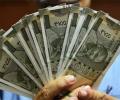
The rupee recovered to 95.18 against the US dollar after hitting an all-time intra-day low of 95.44. The recovery was supported by possible RBI intervention amid renewed Gulf tensions and rising crude oil prices.

The Reserve Bank of India (RBI) has maintained its benchmark policy rate at 5.25 per cent for the fourth consecutive meeting, prioritising clarity on inflation trends, particularly concerning energy costs and geopolitical developments.

'OMCs are incurring losses of Rs 1,000 crore per day due to the West Asia crisis.'

The Indian government has addressed Parliament regarding a case of an Indian national seeking repatriation from Russia due to the situation in West Asia and the Gulf region. The government also responded to queries about Indian nationals denied entry to South Korea and seafarers detained in foreign countries.

'The Rs 30,954 crore inflows recorded in May 2026 reflects around 16 per cent year-on-year rise.'

Indian equity benchmarks, Sensex and Nifty, ended lower after a spectacular rally, with the Sensex tumbling 931 points, as renewed tensions in West Asia, particularly the risk to the ceasefire deal after Iran closed the Strait of Hormuz, dampened investor optimism.

The International Monetary Fund (IMF) has reduced India's growth forecast for FY27 to 6.4 per cent, citing the potential impact of higher energy prices offsetting the country's economic resilience. Despite this, India remains among the fastest-growing major economies.

Indian stock market benchmark indices Sensex and Nifty experienced a significant decline, driven by escalating tensions in the Middle East and rising crude oil prices.

Indian markets on Dalal Street rallied sharply as easing tensions in the US-Iran conflict and stable oil prices boosted sentiment. Track Nifty 50 and BSE Sensex performance and key global triggers.
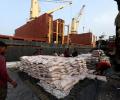
The Federation of Indian Export Organisations (FIEO) has appealed to the Reserve Bank of India (RBI) for liquidity support to Indian exporters, citing a significant increase in freight costs and extended payment cycles due to the ongoing West Asia conflict.

Indian markets on Dalal Street rallied sharply as easing tensions in the US-Iran conflict and stable oil prices boosted sentiment. Track Nifty 50 and BSE Sensex performance and key global triggers.

For India, much is at stake: Crucial energy supplies traversing the Strait of Hormuz, the fate of its 10 million citizens living and working in West Asia -- who send generous remittances home -- and its major trade links with the region.

Sharp differences between Iran and the UAE over the West Asia conflict were on full display during the BRICS foreign ministers' meeting in New Delhi, signalling the challenges the bloc faces in reaching a consensus position on the crisis.

Indian equities on Dalal Street saw volatility as global market trends and weak rupee impacted investor sentiment. Track Sensex, Nifty50 movement and key market drivers for May 5, 2026.

Iran has strongly rejected former US President Donald Trump's assertion that the Strait of Hormuz is 'NEW U.S. TERRITORY', with top officials warning that his 'delusions' would be 'corrected' and highlighting the gap between Washington's claims and its actual influence over the strategic waterway.

The report notes that equities had faced pressure from elevated valuation premiums, subdued nominal gross domestic product (GDP) and earnings growth, sustained foreign portfolio investor (FPI) selling, artificial intelligence (AI) infrastructure euphoria, and external shocks including US tariffs and a spike in crude oil prices due to geopolitical tensions in West Asia. However, several of these factors are now reversing.

India has strongly protested a US military strike on the commercial vessel Settebello off the Oman coast, which left three of the 24 Indian crew members missing. The US Central Command stated it disabled the Palau-flagged vessel for violating a blockade of Iranian ports.
Indian benchmark indices Sensex and Nifty experienced a significant slump, with the Sensex tumbling 719.08 points, driven by escalating West Asian tensions, a sharp rise in crude oil prices, and a global sell-off in technology stocks.

Indian stock markets are set to be influenced by developments in US-Iran negotiations, crude oil prices, and foreign investor activity in the upcoming holiday-shortened week, according to market analysts.

US Special Representative Sergio Gor met with Sri Lankan President Anura Kumara Dissanayake to discuss strengthening bilateral relations and Sri Lanka's stance on the Middle East crisis. The visit occurs amidst regional tensions and US efforts to secure trade routes in the Indo-Pacific.

India's retail inflation, measured by the Consumer Price Index (CPI), rose to 4.45 per cent in July, up from 4.38 per cent in June, primarily due to higher food prices, particularly onions and ginger. This marks the second consecutive month the inflation rate has remained above the Reserve Bank's median target.

Prime Minister Narendra Modi cautioned against the 'weaponisation' of technology and critical minerals at the BRICS summit, advocating for cooperation to foster shared prosperity. Concurrently, Chinese President Xi Jinping announced plans for an open-source AI ecosystem for BRICS nations, positioning Beijing as a key technology partner amid global AI competition.
